

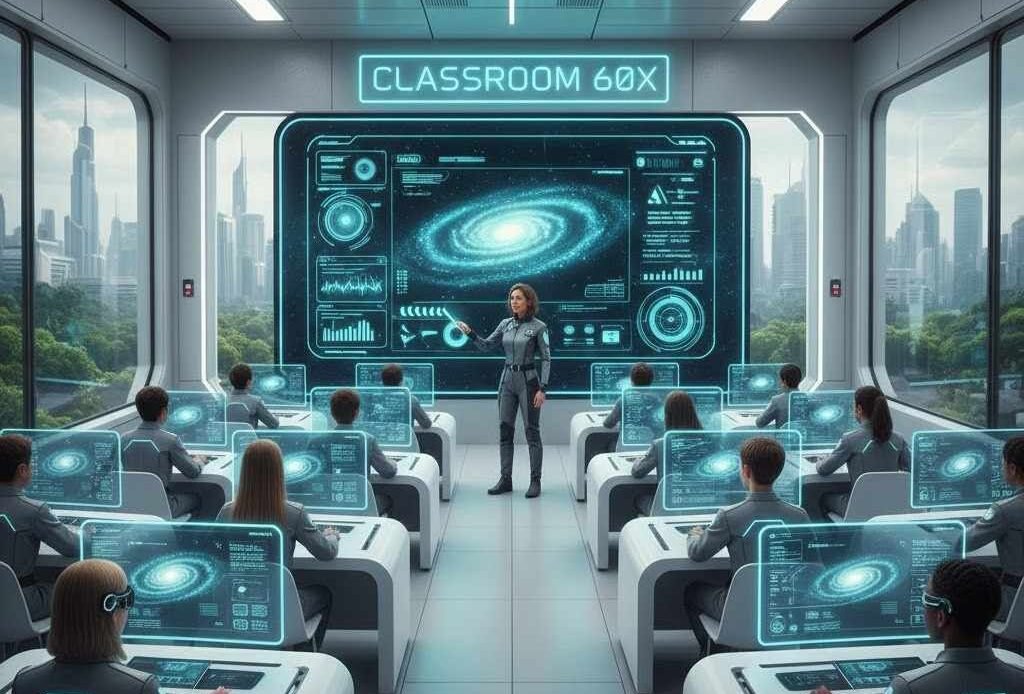
Remember when classrooms meant rows of wooden desks, a dusty chalkboard, and textbooks that weighed more than your backpack? Well, those days are fading fast. Today, we’re witnessing something remarkable: the rise of Classroom 60x, a game-changing approach that’s revolutionizing how students learn and teachers teach.
Let me share a quick story. Last month, I visited my niece’s middle school, and what I saw left me speechless. Students weren’t just sitting passively—they were collaborating on interactive whiteboards, accessing lessons from cloud-based platforms, and receiving instant feedback on their work. The teacher told me this transformation happened after they adopted Classroom 60x technologies. That’s when I realized we’re not just talking about new gadgets; we’re talking about a fundamental shift in education.
In this comprehensive guide, I’ll walk you through everything you need to know about Classroom 60x—from understanding what it actually is to implementing it successfully in your own learning environment. Whether you’re a teacher looking to enhance student engagement, an administrator seeking educational innovation, or a parent wanting to understand modern learning tools, this article has you covered.
What Exactly is Classroom 60x?
Classroom 60x represents the sixth generation of digital classroom solutions that integrate cutting-edge technology with proven teaching methods. Unlike traditional classrooms, Classroom 60x creates an immersive learning environment where technology isn’t just an add-on—it’s woven into every aspect of the educational experience.
Think of it this way: if traditional classrooms are like flip phones, Classroom 60x is the smartphone of education. It combines interactive displays, real-time analytics, multimedia content, and collaborative tools into one seamless ecosystem. Moreover, it adapts to each student’s needs, making personalized learning not just a buzzword but a daily reality.
The “6x” in the name isn’t arbitrary. It refers to six core multipliers that exponentially improve learning outcomes:
- Six times better engagement through interactive content
- Six times faster feedback with real-time assessment tools
- Six times more collaboration via digital workspaces
- Six times greater personalization using adaptive learning algorithms
- Six times improved accessibility through multi-device support
- Six times enhanced efficiency for teachers and administrators
Furthermore, Classroom 60x isn’t just one product—it’s an approach that encompasses various educational technology tools working together harmoniously.
Core Features That Make Classroom 60x Revolutionary
Interactive Display Technology: Beyond Traditional Screens
At the heart of Classroom 60x lies its interactive display system. These aren’t your grandfather’s projectors. Instead, they’re massive, touch-sensitive screens that respond to multiple users simultaneously.
Here’s what makes them special: Teachers can pull up a 3D model of the human heart, and students can walk up, rotate it, zoom in on different chambers, and even see animated blood flow. In addition, the system records all interactions, creating an automatic log of student participation.
I recently spoke with Sarah, a fifth-grade science teacher, who told me: “Before Classroom 60x, getting kids excited about cellular biology was like pulling teeth. Now? They’re fighting over who gets to demonstrate mitosis on the interactive board!”
Real-Time Analytics: Data-Driven Teaching at Its Finest
One of the most powerful aspects of Classroom 60x is its learning analytics dashboard. This feature provides teachers with instant insights into student performance, engagement levels, and comprehension.
For instance, when a teacher presents a lesson, the system tracks:
- Which students are actively participating
- How long students spend on each activity
- Where students struggle most frequently
- Assessment results in real-time
- Engagement metrics across different content types
Consequently, teachers can adjust their teaching on the fly. If the dashboard shows that 70% of students are confused about a concept, the teacher can immediately slow down, provide additional examples, or switch to a different teaching method.
Cloud-Based Content Management: Access Anywhere, Anytime
Classroom 60x leverages cloud storage solutions to ensure that learning materials are always accessible. This means students can review lessons at home, catch up after absences, or work ahead if they’re particularly motivated.
Additionally, teachers can:
- Upload lesson plans and share them instantly
- Access a library of educational resources
- Distribute assignments with one click
- Collect and grade work digitally
- Provide multimedia feedback including voice notes and video explanations
This seamless integration eliminates the “I forgot my homework at school” excuse once and for all!
Adaptive Learning Paths: Personalization at Scale
Perhaps the most impressive feature is Classroom 60x’s artificial intelligence engine that creates personalized learning experiences. The system analyzes each student’s performance and automatically adjusts content difficulty, pacing, and presentation style.
Let me illustrate with an example. Imagine two students, Jake and Emma, both learning algebra. Jake grasps concepts quickly through visual representations, while Emma needs step-by-step written explanations. Classroom 60x recognizes these learning styles and presents the same algebraic concept differently to each student—visual diagrams for Jake, detailed written procedures for Emma.
As a result, both students progress at their optimal pace without feeling rushed or held back.
How Classroom 60x Enhances Student Engagement
Gamification Elements: Making Learning Fun
Classroom 60x incorporates gamification strategies that transform routine lessons into exciting challenges. Students earn points, badges, and achievements for completing assignments, participating in discussions, and helping classmates.
Here’s where it gets interesting: Teachers can create classroom leaderboards (with privacy settings, of course), set up team competitions, and design quest-based learning where students progress through levels like in a video game.
Tom, a high school history teacher, shared this anecdote: “I gamified the American Revolution unit. Students formed ‘battalions,’ completed ‘missions,’ and earned ‘strategic points.’ Suddenly, kids who never participated were leading discussions about the Treaty of Paris. Student motivation went through the roof!”
Multimedia Integration: Bringing Subjects to Life
Gone are the days of static textbook images. Classroom 60x supports virtual reality experiences, 360-degree videos, interactive simulations, and augmented reality overlays.
For example, during a history lesson about ancient Rome, students can take a virtual field trip to the Colosseum, walk through ancient streets, and interact with historically accurate recreations. Similarly, in biology, they can shrink down to cellular size and navigate through a human cell, observing organelles in action.
These immersive experiences create emotional connections with content, leading to deeper understanding and better retention.
Collaborative Learning Tools: Teamwork Makes the Dream Work
Classroom 60x excels at facilitating collaborative learning. Its digital workspaces allow students to work together on projects regardless of physical location.
Features include:
- Real-time document collaboration where multiple students edit simultaneously
- Video conferencing integration for remote group work
- Shared digital whiteboards for brainstorming
- Peer review systems with structured feedback templates
- Group presentation tools with role assignments
Moreover, the system tracks individual contributions to group projects, ensuring accountability and fair assessment.
Also Read More: Finnorth
Implementing Classroom 60x: A Step-by-Step Guide
Step 1: Assess Your Current Needs and Infrastructure
Before diving in, take stock of what you have. Conduct an infrastructure audit by answering these questions:
- What’s your current internet bandwidth?
- How many devices do students have access to?
- What educational software are you currently using?
- What are your biggest classroom management challenges?
- What learning outcomes do you want to improve?
I recommend creating a simple spreadsheet listing your needs, current resources, and gaps. This becomes your roadmap for implementation.
Step 2: Secure Buy-In from Stakeholders
Classroom 60x won’t succeed without support from teachers, administrators, parents, and students. Therefore, organize information sessions where stakeholders can:
- Experience the technology hands-on
- See demonstration lessons
- Ask questions and voice concerns
- Understand the educational benefits
- Learn about implementation timelines
One principal told me: “I thought teachers would resist change, but after they saw student engagement triple in pilot classrooms, they were begging to be next!”
Step 3: Start with a Pilot Program
Rather than implementing Classroom 60x school-wide immediately, begin with a pilot program. Select 2-3 teachers who are tech-enthusiastic and willing to provide honest feedback.
During the pilot phase:
- Monitor student performance metrics closely
- Collect teacher feedback weekly
- Document challenges and solutions
- Measure engagement improvements
- Compare results with non-pilot classrooms
This phased approach allows you to refine your implementation strategy based on real-world experience.
Step 4: Provide Comprehensive Professional Development
Teacher training is absolutely critical. Even the best technology fails without proper training. Develop a professional development program that includes:
- Initial hands-on workshops (minimum 8 hours)
- Ongoing support with tech coaches available
- Peer mentoring where experienced users help newcomers
- Regular refresher sessions for advanced features
- Access to online tutorials and documentation
Additionally, create a teacher community where educators can share best practices, troubleshoot issues, and celebrate successes.
Step 5: Roll Out Gradually with Continuous Support
Once your pilot succeeds, expand gradually—perhaps adding one grade level per semester. This measured approach prevents overwhelming your technical support team and allows for course corrections.
During rollout:
- Maintain technical helpdesk availability
- Schedule regular check-ins with teachers
- Monitor system performance and address issues promptly
- Gather student and parent feedback
- Celebrate quick wins to maintain momentum
Remember, implementation isn’t a sprint—it’s a marathon. Therefore, patience and persistence are your best friends.
Real-World Success Stories: Classroom 60x in Action

Elementary School Transformation: Lincoln Elementary’s Journey
Lincoln Elementary in Portland faced declining reading scores and low student motivation. After implementing Classroom 60x, they focused on literacy development using interactive storytelling and adaptive reading programs.
The results were stunning:
- Reading proficiency increased by 34% in one year
- Library checkouts tripled
- Student attendance improved by 15%
- Parent involvement in reading activities doubled
Principal Martinez explained: “Classroom 60x didn’t just change how we teach—it changed how kids feel about learning. They’re excited to come to school now!”
High School STEM Revolution: Riverside High’s Math Miracle
Riverside High School struggled with mathematics achievement, particularly in algebra and geometry. They integrated Classroom 60x’s visualization tools and problem-solving simulations into their curriculum.
The transformation included:
- 3D geometric modeling for spatial reasoning
- Real-world math applications connected to student interests
- Collaborative problem-solving challenges
- Instant feedback on practice problems
Within two years:
- Math test scores increased 42%
- Advanced math enrollment grew 78%
- Students reported feeling more confident in mathematics
- Teacher satisfaction with instructional tools reached 95%
University Distance Learning: Breaking Geographic Barriers
State University implemented Classroom 60x for online education programs, serving students across multiple time zones. The platform’s synchronous and asynchronous features created a cohesive learning community.
Key improvements included:
- Course completion rates increased from 68% to 91%
- Student satisfaction scores rose significantly
- Instructor workload decreased due to automation
- Global collaboration projects became standard
Professor Chen noted: “I can now provide the same quality education to a student in Tokyo as to one in our physical classroom. Classroom 60x eliminated the quality gap in distance education.”
Overcoming Common Challenges with Classroom 60x
Challenge 1: The Cost Concern
Let’s address the elephant in the room: Classroom 60x requires investment. However, smart implementation strategies can make it affordable:
Solution approaches:
- Apply for educational technology grants through organizations like DonorsChoose
- Implement in phases to spread costs over multiple budget cycles
- Leverage BYOD (Bring Your Own Device) policies where appropriate
- Explore volume licensing discounts for district-wide purchases
- Calculate long-term savings from reduced textbook costs and improved efficiency
Furthermore, many schools report that improved student outcomes lead to increased funding and enrollment, creating a positive financial cycle.
Challenge 2: Technical Difficulties and Downtime
Technology inevitably experiences hiccups. Consequently, preparing for technical issues is essential:
Mitigation strategies:
- Maintain backup lesson plans that don’t require technology
- Ensure robust IT support with quick response times
- Implement redundant systems for critical components
- Schedule regular maintenance windows during non-instructional time
- Train teachers in basic troubleshooting
As one IT director advised: “Our goal isn’t zero technical problems—that’s impossible. Our goal is zero instructional time lost to technical problems.”
Challenge 3: Digital Divide and Equity Issues
Not all students have equal access to technology at home, creating potential equity gaps. Address this through:
Equity strategies:
- Provide device lending programs for students without home access
- Offer extended library hours with computer access
- Create offline modes for essential content
- Partner with community organizations for internet access
- Design assignments that don’t require expensive technology
Schools committed to equity ensure Classroom 60x enhances education for all students, not just privileged ones.
Challenge 4: Teacher Resistance and Change Fatigue
Some teachers feel overwhelmed by constant changes in education. Therefore, addressing their concerns compassionately is crucial:
Support strategies:
- Honor teachers’ existing expertise and show how Classroom 60x enhances it
- Provide choice in implementation pace and methods
- Share success stories from peer teachers
- Reduce other requirements during the transition period
- Celebrate small wins and progress publicly
Remember, teachers aren’t resistant to change—they’re resistant to changes that don’t clearly benefit students.
Best Practices for Maximizing Classroom 60x Benefits
Create a Blended Learning Environment
The most successful Classroom 60x implementations don’t abandon traditional teaching—they enhance it. Develop a blended learning model that combines:
- Direct instruction for introducing concepts
- Digital practice for skill development
- Collaborative projects for application
- Traditional assessments alongside digital portfolios
- Face-to-face discussions complemented by online forums
This balanced approach leverages the strengths of both traditional and digital methods.
Focus on Pedagogy, Not Just Technology
Here’s a crucial insight: Classroom 60x is a tool, not a magic solution. The pedagogical approach matters more than the technology itself.
Effective implementation requires:
- Clear learning objectives for every activity
- Intentional use of features to support specific instructional goals
- Regular reflection on what’s working and what isn’t
- Willingness to abandon features that don’t add value
- Focus on student outcomes rather than tech for tech’s sake
As education researcher Dr. Thompson explains: “Technology should be invisible—students should notice they’re learning, not that they’re using technology.”
Build a Community of Practice
Create opportunities for educators to learn from each other:
- Establish monthly sharing sessions where teachers demonstrate successful lessons
- Create online communities for asynchronous collaboration
- Organize classroom visits so teachers can observe peers
- Recognize and celebrate innovation in teaching
- Provide time for collaborative planning
These communities become self-sustaining engines of continuous improvement.
Gather and Act on Feedback Consistently
Implement systematic feedback collection from all stakeholders:
- Student surveys about their learning experience
- Teacher reflections on what’s working
- Parent input through regular communication
- Performance data from the system itself
- Observation notes from instructional coaches
Most importantly, demonstrate that feedback leads to action. When students see their suggestions implemented, engagement and ownership increase dramatically.
The Future of Education with Classroom 60x
Emerging Trends and Innovations
Classroom 60x continues evolving with emerging technologies:
Artificial Intelligence Integration: Future versions will offer even more sophisticated AI tutoring that can explain concepts using natural language processing and understand context better than ever.
Virtual Reality Expansion: As VR headsets become more affordable, expect fully immersive historical recreations, scientific simulations, and career exploration experiences.
Predictive Analytics: Advanced algorithms will predict which students need intervention before they fall behind, enabling proactive support rather than reactive remediation.
Brain-Computer Interfaces: Though still experimental, emerging neurotechnology may eventually allow direct assessment of comprehension and cognitive load, enabling real-time difficulty adjustments.
Preparing Students for Tomorrow’s World
Beyond academic achievement, Classroom 60x develops 21st-century skills that students need:
- Digital literacy through daily technology use
- Collaboration skills via group projects
- Critical thinking through problem-based learning
- Adaptability by working with evolving tools
- Self-directed learning through personalized paths
These competencies prepare students not just for tests, but for life.
Getting Started with Classroom 60x Today
Immediate Action Steps for Teachers
If you’re a teacher ready to explore Classroom 60x, start small:
- Identify one challenge in your current teaching (e.g., low engagement in specific topics)
- Research which Classroom 60x features address that challenge
- Attend a demonstration or webinar to see the tool in action
- Connect with teachers already using it in similar contexts
- Propose a pilot to your administrator with clear objectives
Don’t wait for perfect conditions—start somewhere and iterate.
Guidance for Administrators
School leaders can catalyze transformation by:
- Allocating budget for both technology and training
- Protecting time for teacher professional development
- Reducing other initiatives to prevent change fatigue
- Visiting classrooms to observe implementation
- Communicating vision consistently to all stakeholders
Leadership commitment determines whether Classroom 60x becomes transformational or just another abandoned initiative.
Resources for Parents
Parents play a vital role in supporting Classroom 60x implementation:
- Attend school information sessions to understand the system
- Encourage your child to use the tools at home
- Communicate with teachers through the platform
- Monitor your student’s progress via the parent portal
- Advocate for necessary resources if your child lacks device access
Your involvement multiplies the impact of classroom learning.
Conclusion: Embracing the Classroom 60x Revolution
As we’ve explored throughout this guide, Classroom 60x represents far more than just new technology in education. It’s a fundamental reimagining of what classrooms can be—spaces where every student has the opportunity to learn in ways that work best for them, where teachers have powerful tools to understand and support each learner, and where education finally keeps pace with the digital world our students inhabit.
The transformation won’t happen overnight. It requires investment—not just financial, but in time, training, and trust. However, the schools that have embraced Classroom 60x consistently report the same outcome: students who are more engaged, more capable, and more prepared for their futures.
Remember that story I shared at the beginning about my niece’s classroom? Here’s the ending: Three months after implementing Classroom 60x, her school’s test scores weren’t just slightly better—they were dramatically improved. More importantly, though, was what her mother told me: “For the first time ever, my daughter is excited about school. She talks about what she learned at dinner. She voluntarily reviews lessons on weekends. That’s the real success.”
That’s the promise of Classroom 60x—not just better scores, but a genuine love of learning that will serve students throughout their lives.
Whether you’re taking your first steps toward implementation or looking to optimize an existing Classroom 60x system, the journey is worthwhile. The future of education isn’t coming—it’s already here. The question is: will you help shape it?
Read more Topics on techbizalert.com
